Priya Sharma
2 weeks agoClear modules and helpful lab practice. Instructors explain concepts step by step.
The Generative AI & Prompt Engineering course is a comprehensive, practical, and industry-oriented training program designed for students, software developers, business professionals, marketers, entrepreneurs, and AI enthusiasts who want to master modern Generative AI tools and Prompt Engineering. The course covers ChatGPT, Claude, Gemini, LLMs, prompt design, AI-powered content creation, image generation, automation, API integration, RAG, and real-world AI applications. Through hands-on projects and industry case studies, learners gain the practical skills required to use Generative AI for business, software development, marketing, education, and productivity.
The Generative AI & Prompt Engineering course is a complete, practical, and industry-focused training program designed to help learners master the latest advancements in Artificial Intelligence. Generative AI has transformed the way individuals and businesses create content, write code, generate images, automate workflows, analyze data, and solve complex problems. Today, organizations across healthcare, finance, education, marketing, software development, legal services, customer support, and research are rapidly adopting Generative AI to improve productivity and innovation. This course provides step-by-step guidance from beginner to advanced level, enabling learners to confidently use, customize, and integrate modern AI tools into real-world workflows.
The course begins with an introduction to Artificial Intelligence, Machine Learning, Deep Learning, and Generative AI, helping students understand how modern AI systems generate text, images, audio, video, and code. Learners explore the evolution of AI and understand how Large Language Models (LLMs) have transformed digital productivity and software development.
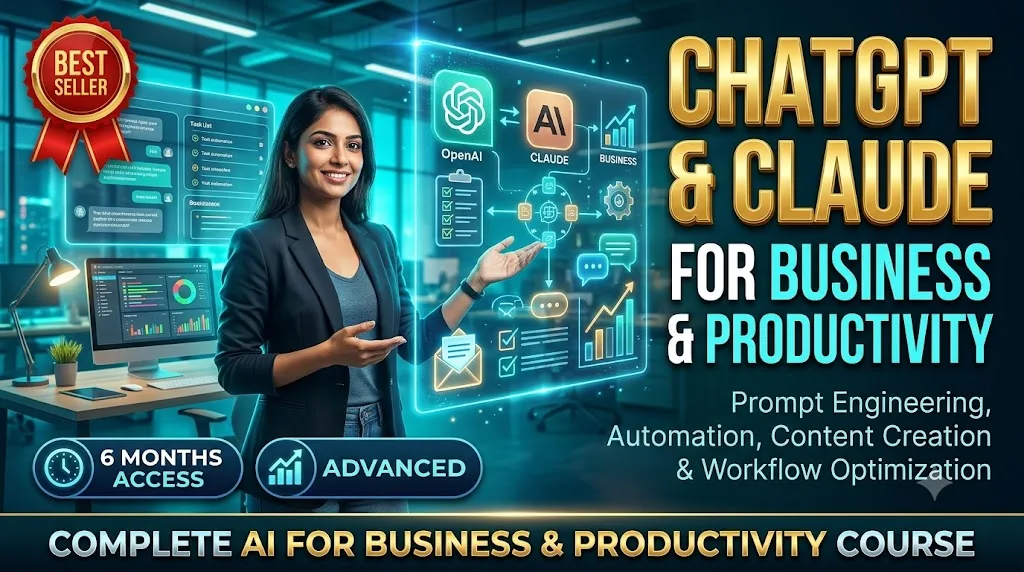
Students receive complete guidance on Large Language Models (LLMs), including how transformer models work, tokenization, embeddings, context windows, inference, fine-tuning concepts, and model capabilities. Popular AI platforms such as ChatGPT, Claude, Gemini, Microsoft Copilot, Grok, Perplexity, and open-source LLMs are introduced with practical demonstrations and business use cases.
A major section focuses on Prompt Engineering, where learners understand how to communicate effectively with AI models. Students master prompt structure, prompt optimization, system prompts, role prompting, chain-of-thought prompting, few-shot prompting, zero-shot prompting, multi-step prompting, prompt templates, reusable workflows, and prompt testing techniques that produce accurate and reliable AI responses.
The course provides extensive training on AI-Powered Content Creation, enabling learners to generate blogs, articles, social media content, business emails, reports, resumes, proposals, advertisements, marketing campaigns, technical documentation, presentations, and educational material using Generative AI.
Students also learn AI-assisted Software Development, where AI is used for code generation, debugging, documentation, testing, API development, database queries, frontend design, backend architecture, code optimization, DevOps automation, and software project planning. Learners understand how developers improve productivity using AI coding assistants.
The curriculum introduces AI Image and Video Generation, allowing learners to create logos, illustrations, marketing creatives, social media graphics, product mockups, AI avatars, presentations, and promotional videos using leading AI image and video generation platforms. Students also explore image editing, prompt refinement, style control, and creative workflows.
Another important module covers Retrieval-Augmented Generation (RAG), vector databases, embeddings, semantic search, document retrieval, knowledge bases, AI chatbots, and enterprise AI systems. Learners understand how organizations build AI assistants capable of answering questions using private business documents and organizational knowledge.
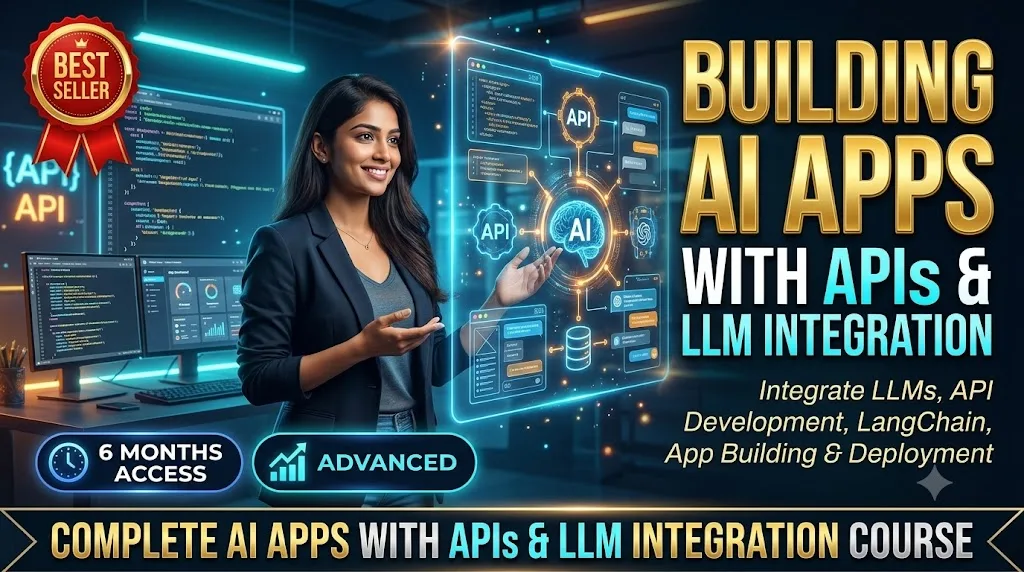
Students gain practical knowledge of AI APIs and LLM Integration, learning how to connect AI models to web applications using Python, JavaScript, Node.js, REST APIs, OpenAI APIs, Anthropic APIs, Google AI APIs, and cloud-based AI services. They understand how developers integrate AI into websites, SaaS platforms, mobile applications, and enterprise software.
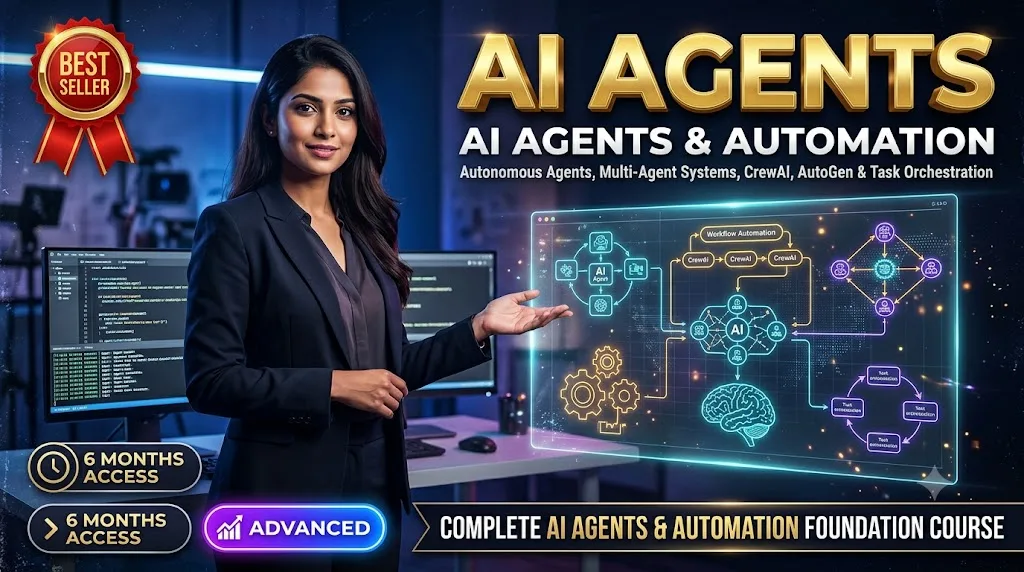
The course also covers AI Automation, enabling learners to build intelligent workflows using AI agents, workflow automation tools, document processing, email automation, customer support automation, content pipelines, business process automation, and AI-powered productivity systems.
Modern AI topics are integrated throughout the curriculum, including AI Ethics, Responsible AI, hallucination reduction, prompt security, privacy, AI governance, multimodal AI, autonomous AI agents, cloud AI platforms, AI deployment, and future trends in Artificial Intelligence.
Hands-on learning forms the foundation of the course. Students complete multiple real-world Generative AI projects, including AI Chatbot Development, Resume Generator, AI Content Writer, Marketing Campaign Generator, Customer Support Assistant, Document Summarizer, AI Research Assistant, Code Generation Tool, AI Knowledge Base, Business Automation Assistant, AI Image Generator, and LLM-powered Web Applications. These projects simulate professional AI development environments and strengthen practical implementation skills.
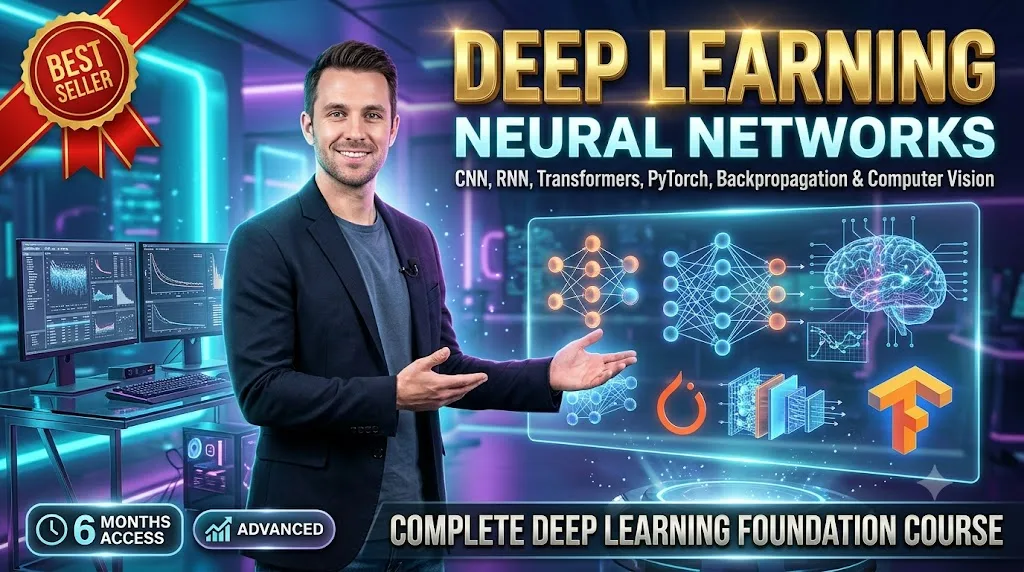
Career development modules prepare learners for AI careers through interview preparation, resume building, LinkedIn optimization, portfolio development, GitHub projects, certification guidance, freelancing strategies, and enterprise AI best practices. Students also receive guidance on advanced learning paths including AI Agents, LangChain, LlamaIndex, MCP, Deep Learning, Computer Vision, Natural Language Processing, MLOps, and Enterprise AI Architecture.
By the end of the Generative AI & Prompt Engineering course, learners will confidently design effective prompts, use leading AI tools professionally, automate business workflows, integrate LLM APIs into applications, create AI-powered content, build intelligent assistants, and solve real-world business problems using Generative AI technologies. They will possess the practical knowledge, creativity, technical expertise, and AI implementation skills required to work effectively in Artificial Intelligence, Software Development, Marketing, Education, Business Automation, and Digital Transformation.
This course is highly recommended for students, software developers, full-stack developers, Python developers, marketers, content creators, entrepreneurs, business professionals, educators, researchers, freelancers, startup founders, IT professionals, and anyone interested in modern Artificial Intelligence technologies. Upon successful completion, learners will be prepared for roles such as AI Engineer, Prompt Engineer, Generative AI Specialist, AI Consultant, LLM Application Developer, AI Automation Engineer, AI Product Specialist, AI Solutions Architect, Technical Content Creator, AI Research Associate, or Artificial Intelligence Consultant, while building a strong foundation for advanced careers in AI Agents, Large Language Models (LLMs), Enterprise AI, Cloud AI, and next-generation intelligent software systems.
Curriculum will be published soon.
Director
Clear modules and helpful lab practice. Instructors explain concepts step by step.
Good structure and timely assessments. Would recommend for beginners.

Install Institute Hub
Add our app to your phone or computer for quick, full-screen access.